
Building robotics in healthcare together: working smarter, more time for people
The MedTech project focuses on the development and application of robotics and AI within the healthcare sector. With this project, the partners involved are taking an important step in alleviating the workload in healthcare and improving care processes.
Cause
The pressure on healthcare is increasing due to staff shortages and a growing demand for care. Innovative solutions are needed to support healthcare professionals and make processes more efficient.
Within this project, it is being investigated how robotics can contribute to:
- supporting healthcare professionals in their daily work
- automating repetitive and logistical tasks
- improving the quality and efficiency of care processes
What does the project focus on?
Within the project, work is being done on two concrete innovation streams that contribute to relieving the burden on healthcare professionals and improving care processes:
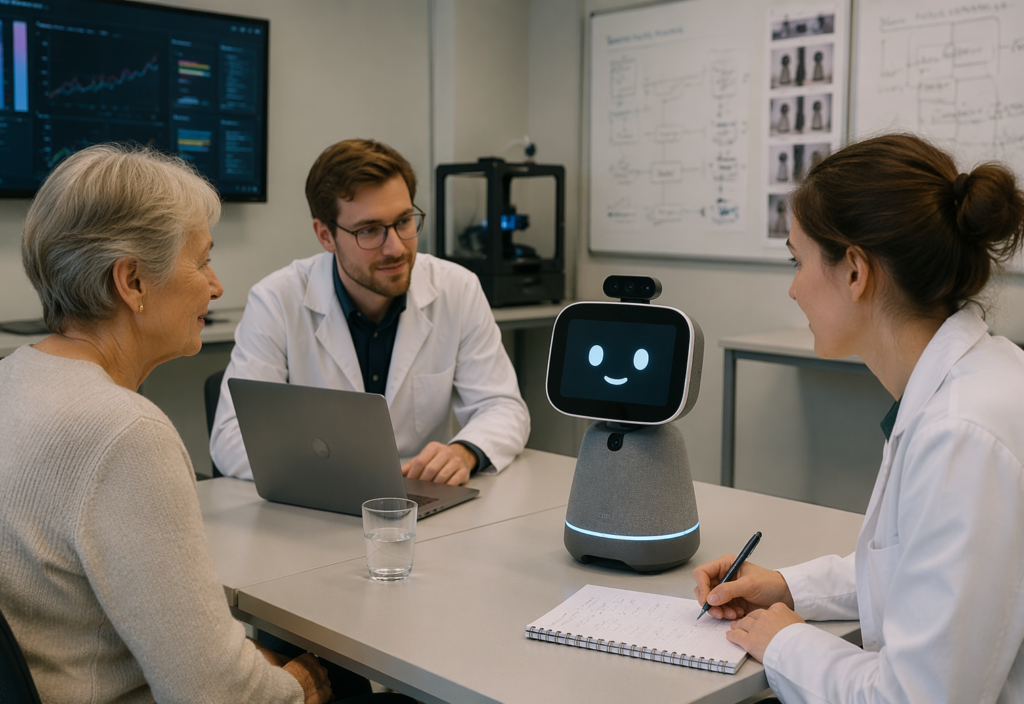
1. Development of a medical history robot
In collaboration with Amphia, Datacation, and Avans University of Applied Sciences, a robot is being developed to assist patients with taking a medical history. This solution contributes to more efficient and standardised data collection and can save healthcare providers time.
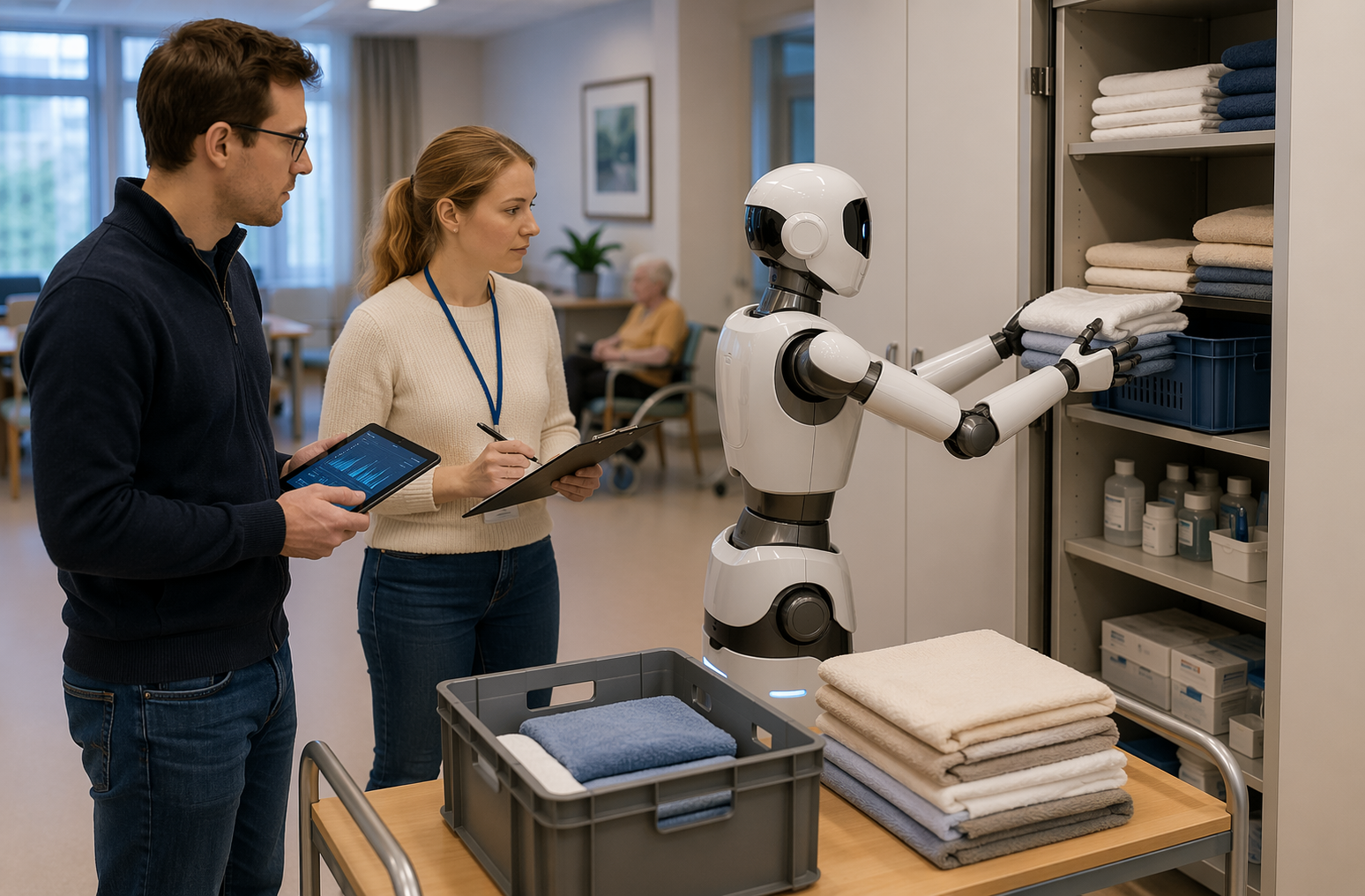
2. Deployment of humanoid logistics robots
Additionally, research is being conducted into whether humanoid robots can perform logistical tasks within elderly care, such as stocking refrigerators and linen cupboards. The aim is to take over repetitive and physical work, allowing care staff to focus on care duties that require human attention.
Execution
The project is being carried out by Breda Robotics in collaboration with Brabant Development Company (BOM), Care Innovation Centre Foundation (CIC), Avans University of Applied Sciences, Datacation, FORCE Foundation (Amphia) and Improvia B.V. Through this collaboration, practical knowledge from healthcare will be combined with technological development and applied research, with the aim of achieving scalable and future-proof solutions. The project runs from 1 May 2026 to 31 December 2027.