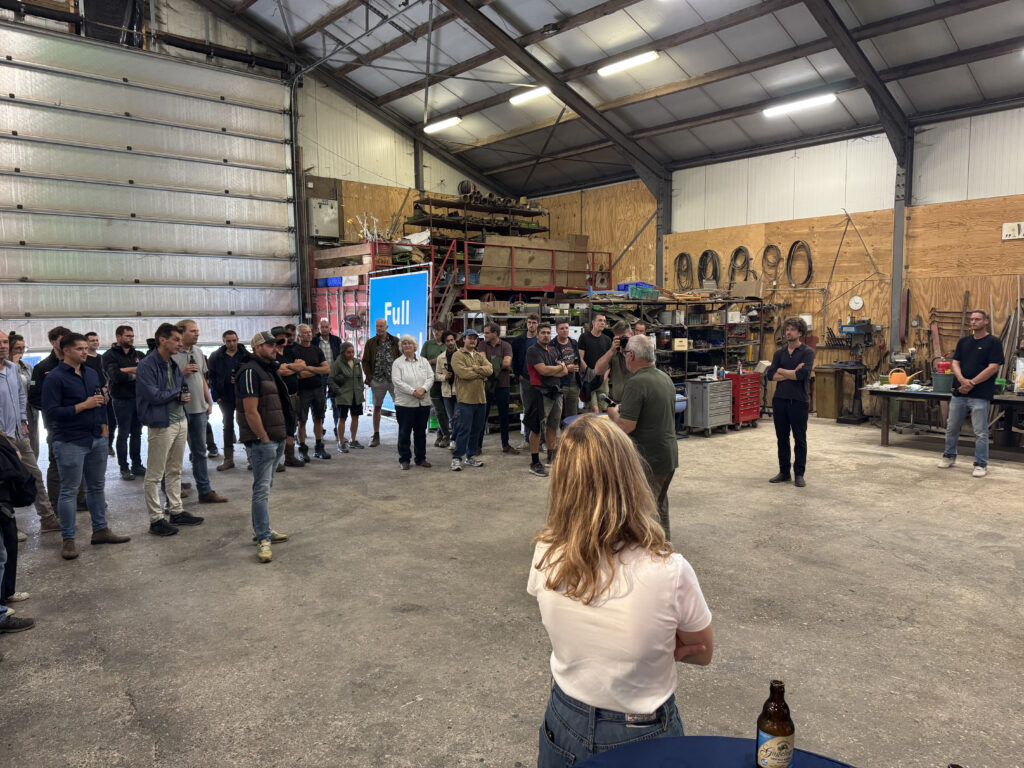
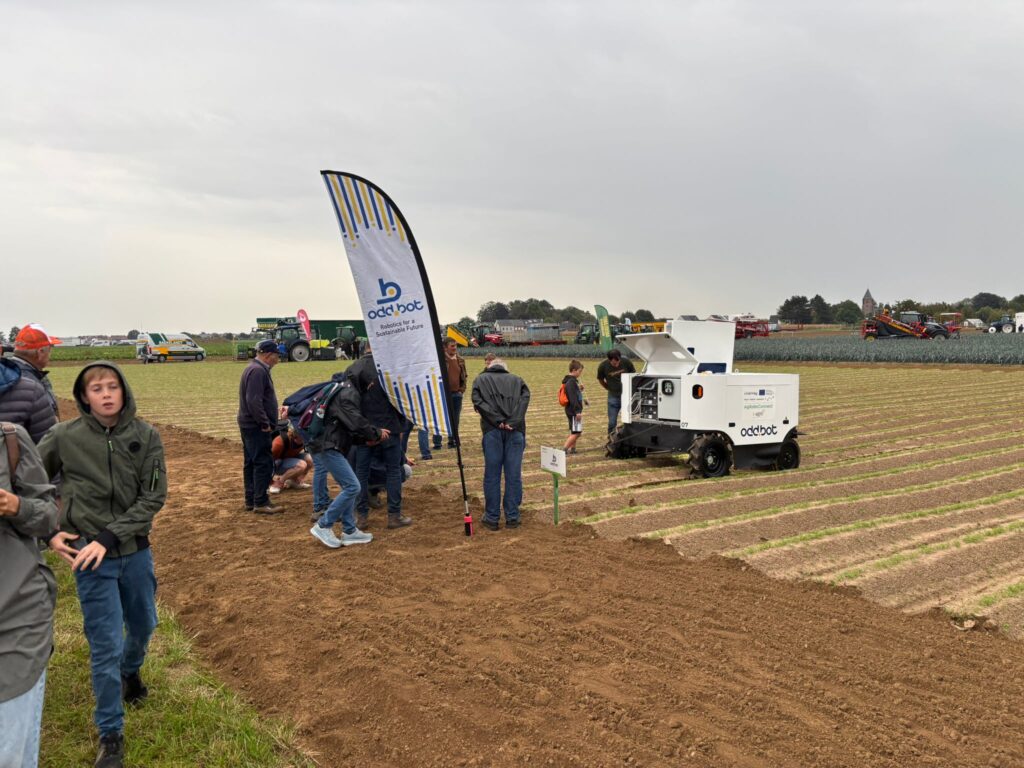
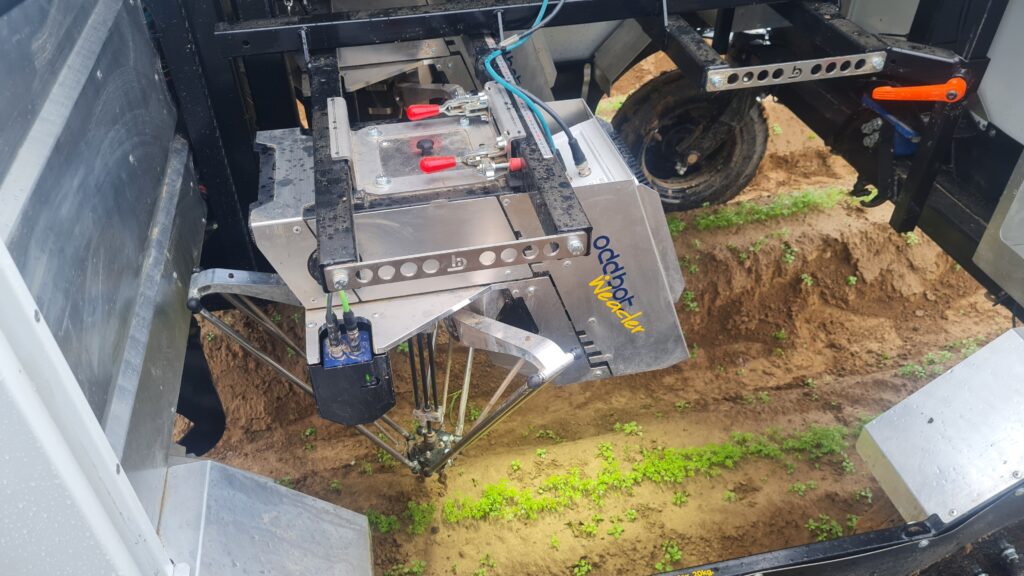
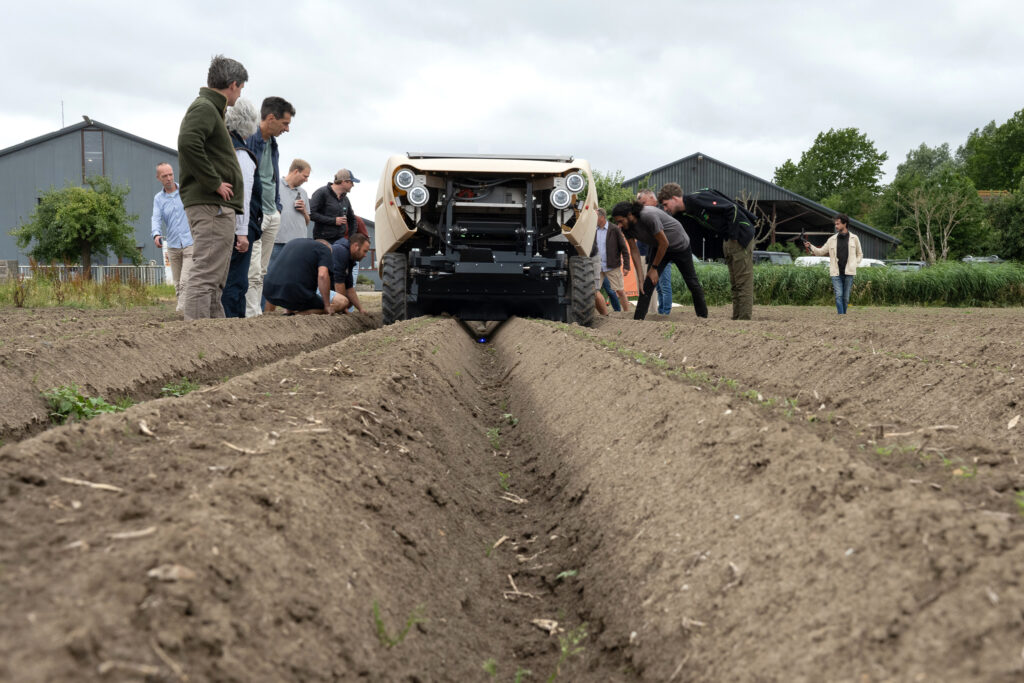
The future of weed control took tangible shape this summer and autumn during two demonstration workshops of autonomous weeding robots. On 26 June, the official launch of Trabotyx's TOR robot took place at Meulwaeter, followed by a second session on 20 September during the Werktuigendagen, where Odd.bot presented its technology to a broad audience.
A Look at Practice
Both sessions were more than a mere technical demonstration. They offered participants an interactive experience where not only the robot's functionality was showcased, but there was also room for dialogue, critical questions, and valuable feedback. The approach was clear: first see, then discuss. What works well? What could be improved? And most importantly: how can these robots be deployed more widely in the agricultural sector?
Participants and engagement
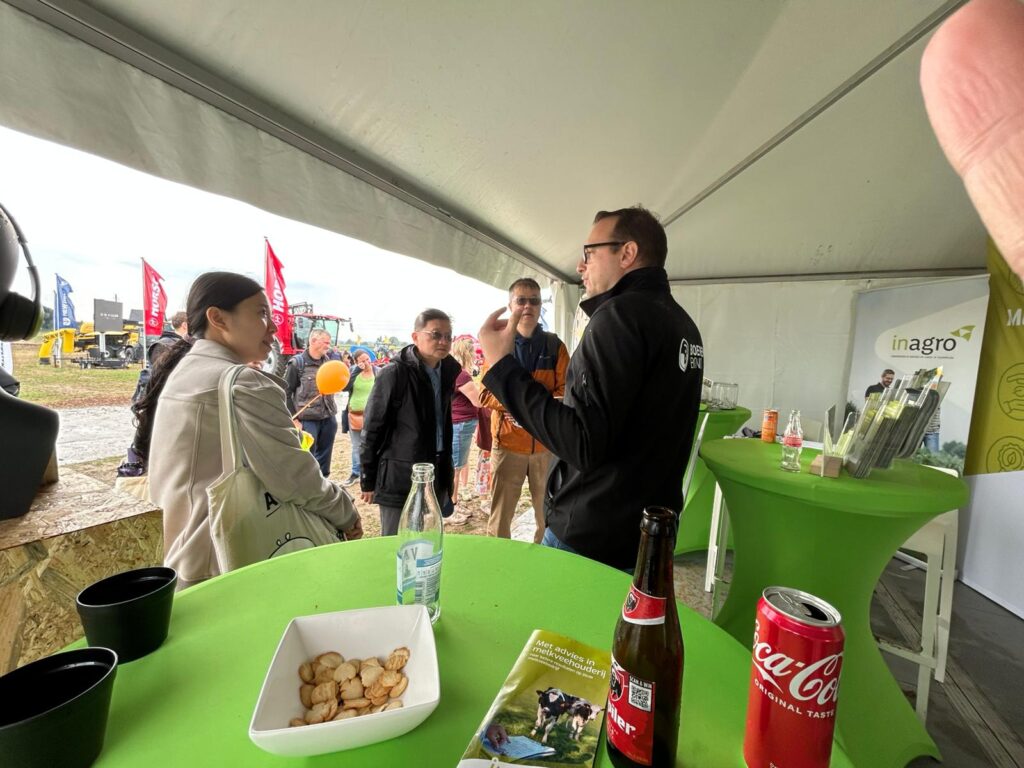
In total, 27 professionals participated in the workshops. Striking was the international interest, with participants from different regions and sectors, including from Taiwan. This diversity created a rich palette of perspectives and strengthened the technology's relevance on a global scale.
First impressions: promising, but still requires further development
The reactions to the robots were predominantly positive. Participants mentioned the technology innovative, labour-saving and promising. The ability to work 24/7 and reduce physical labour was seen as a significant added value.
However, there were also critical notes:
- Supplier dependency
- Price and investment
- Technical robustness
- Maintenance and wear
- Limited applicability in certain crops
Applicability and future outlook
When asked whether the robot could be deployed immediately, only one participant gave a resounding ‘yes’. Others saw potential in the long term, or only for specific crops. Nevertheless, the future outlook is optimistic: on average, the chance that the robot will become common within five years was estimated at 4.21 out of 5.
Recommendations and opportunities
The participants made concrete recommendations to further improve the technology:
- Increase in capacity
- Improvement of Service and maintenance
- Expansion to washed further
- Increase in robustness (thinking of cleaning position, larger machines, more rows, laser option)
Further collaboration was also expressed interest in:
- 6 participants want to actively contribute ideas or test.
- 9 participants may be open to this
Market potential
According to the participants, the greatest opportunities for broad application lie in:
- Smaller agricultural businesses
- Nurseries
- (Organic) vegetable cultivation
- Beetroot and onions
- Small crops
Conclusion
The demonstration sessions of Trabotyx and Odd.bot have shown that autonomous weeding robots are no longer a thing of the future, but offer a real solution to current challenges in agriculture. The technology is promising, but still requires further development and close cooperation with end-users. By actively involving farmers in the innovation process, these robots can grow into a valuable link in more sustainable and efficient agriculture.