At ImProvia, significant work is underway on the further development of the smart walker. Thanks to a recent subsidy boost, the team can expand the functionality with new sensors, intelligence, and comfort-enhancing features.
New features for increased safety
The rollator already has distance monitoring, but it's now being enhanced with a lane-assist function. This helps to prevent the rollator from bumping into walls or door frames. If the aid gets too close to an obstacle, the handle on that side will vibrate slightly. If the space becomes really tight, the electrically powered wheels will automatically self-correct.
Smart support on slopes
Also new is the addition of an IMU (inertial measurement unit), which provides support when walking on sloping or uneven surfaces. After a one-time setup based on user preference, the software automatically adjusts the support for optimal comfort and safety.
Stronger basis for future innovations
Behind the scenes, the team is working on a transition to a CAN bus communication system to connect the four microcontrollers. This will make the architecture more robust, scalable, and better suited for future expansion. Initial tests are promising, although the software side is still undergoing extensive tweaking and optimisation.
Slimmer and more stylish
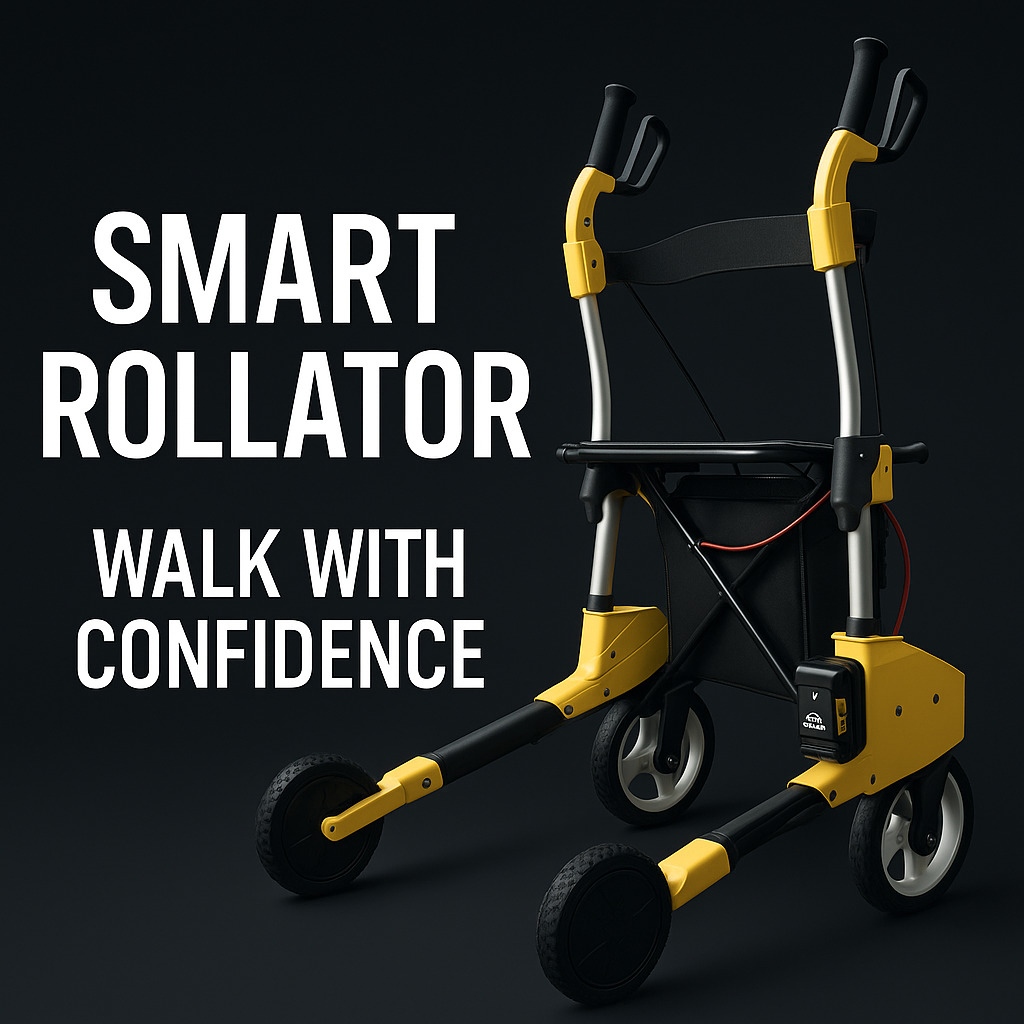
The rollator is also getting an upgrade in terms of design. Colleagues at ImProvia are optimising the existing 3D models, giving the prototype not only a smarter functionality but also a more modern look.
Working together on innovation in healthcare
The smart walker is a prime example of collaboration within the Breda Robotics ecosystem, where technology, care, and innovation come together to improve the quality of life.
Read more about the project here: