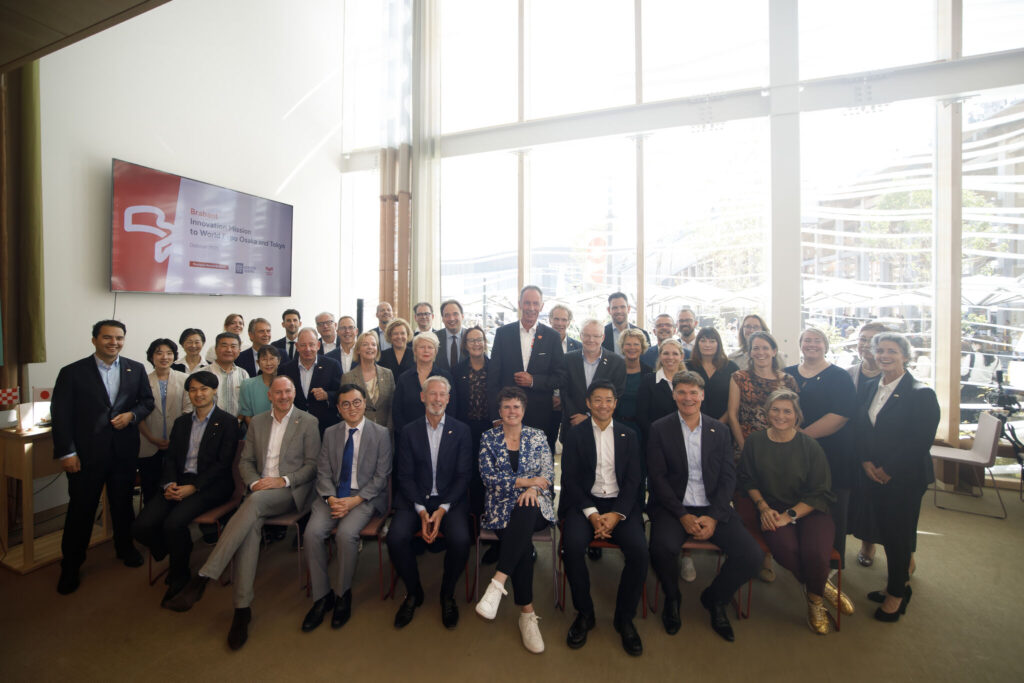
What will healthcare of the future look like? And what role does technology play in it? To answer that question, we travelled to Japan last week as part of a Brabant innovation mission. Board member Iwan de Waard represented us on this special trip. Together with the Province of North Brabant, the Municipality of Breda, the Municipality of Tilburg and various innovative Brabant organisations…
New insights from Japan
During the mission, one question was central: Om te beginnen, de medische technologie is de belangrijkste drijvende kracht geworden in de gezondheidszorg, die een revolutie teweegbrengt in de manier waarop patiënten worden behandeld en de manier waarop medische professionals werken. Deze technologieën omvatten alles, van robotchirurgie en AI-diagnoses tot telegeneeskunde en elektronische medische dossiers.
Bijvoorbeeld, telegeneeskunde maakt het voor patiënten mogelijk om medisch advies te krijgen van artsen zonder dat ze zich fysiek bij het ziekenhuis hoeven te begeven. Dit is vooral nuttig voor mensen die in afgelegen gebieden wonen of die een mobiliteitsbeperking hebben.
Bovendien heeft de gegevensanalyse nieuwe mogelijkheden geopend voor de gezondheidszorg. Door het grote aantal patiëntgegevens te analyseren, kunnen trends en patronen worden geïdentificeerd, die op hun beurt een vroegtijdige opsporing van ziekten mogelijk maken. Dit stelt artsen in staat om behandelingen te personaliseren en preventieve maatregelen te treffen, wat leidt tot betere gezondheidsresultaten.
Tenslotte is de samenwerking tussen de verschillende spelers in de gezondheidszorg van cruciaal belang. Artsen, verpleegkundigen, onderzoekers en patiënten moeten effectief samenwerken om de beste resultaten te bereiken. Dankzij de vooruitgang in communicatietechnologie zijn deze samenwerkingen gemakkelijker dan ooit geworden.
Door middel van deze technologieën en samenwerkingen streeft de gezondheidszorg ernaar patiëntenzorg van hogere kwaliteit te leveren, de toegankelijkheid te verbeteren en de gezondheidsuitkomsten voor iedereen te optimaliseren.
We saw how Japan is using technology to make healthcare more accessible and efficient. For example, it showcased Fujifilm Healthcare Europe seeing how innovative imaging technology supports doctors in diagnostics, we discovered on the World Expo An impressive medical breakthrough: a beating heart grown in a laboratory using stem cells.
In our conversations and presentations, we also shared our own experiences from the Netherlands, where collaboration between government, education and business leads to tangible innovations in healthcare.
“We have created a place in the Netherlands where businesses, education, and government come together to build real solutions. By collaborating and learning from other countries, such as Japan, we can innovate faster and make healthcare future-proof.”
– Iwan de Waard, Board member, Breda Robotics
Innovation in practice
The power of collaboration is evident in the projects we have worked on with our partners in recent years. Three inspiring practical examples:
- Smart Rollator – a smart walking frame that reduces the risk of falls in the elderly by continuously monitoring the distance between the user and the frame and intervening when necessary. The result: greater safety and confidence for users and caregivers alike.
- BuddyLoo – an innovative toilet transfer solution that helps people live independently at home for longer, maintaining dignity and reducing the burden on care staff.
- Hospital logistics with robots Mobile robots are taking over routine transport tasks in hospitals, freeing up healthcare professionals to spend more time on direct patient care.
These projects demonstrate how we collaborate in Brabant on practical innovations that make a difference in healthcare. Thanks to the structural support of partners such as North Brabant Province and Breda Municipality, and the open attitude with which we learn from other countries, we continue to build a future-proof and people-oriented healthcare system.
Discover all our projects and innovations here: